November 9, 2026 • Rebecca Dean, Fun Factory Sensory Gym
What Is a Sensory Room?
A sensory room is a space built to give or calm sensory input. Learn the types, the benefits and how homes, schools and clinics use them.
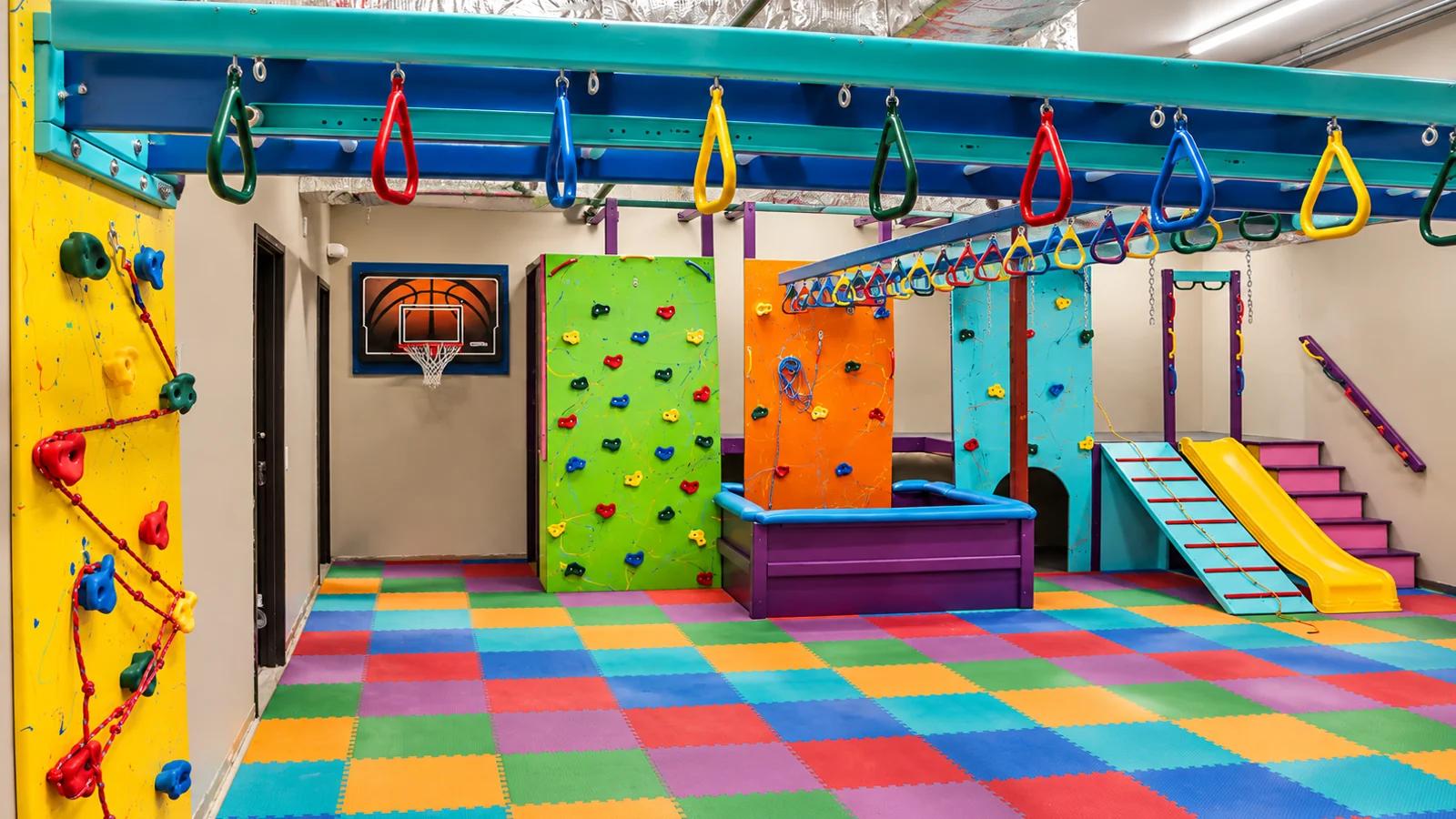
A sensory room is a space designed to give a person the sensory input their body is looking for, or to shut out the input they can't handle, so they can regulate, focus and feel safe. Some sensory rooms are active, with swings, climbing walls and crash pads that provide movement and deep pressure, while others are calming, with low light, soft seating and quiet corners. Most of the sensory rooms we build for homes, schools and therapy clinics combine the two, so a child can move between active play and a place to reset.
Fun Factory has designed and installed more than 4,000 sensory gyms and sensory rooms over 26 years. This guide covers what a sensory room does, who uses one, the main types and how to decide whether one makes sense for your family or facility. If you're ready to plan a room, our guide to designing a sensory room walks through it step by step.
What does a sensory room do?
A sensory room gives the nervous system the kind of input it needs to settle into a calm, alert state. Beyond sight, sound, touch, taste and smell, the body relies on two senses most people never think about: the vestibular sense, which tracks movement and balance, and the proprioceptive sense, which tells you where your body is through pressure on muscles and joints.
Some children seek much more of that input than everyday life provides, so they spin, crash, climb and jump to get it. Others are overwhelmed by input that most people tune out, like a buzzing light or a noisy hallway. A well-designed sensory room meets both needs, with equipment that delivers movement and pressure safely and a space that keeps light, noise and clutter under control.
A sensory room is a tool that supports therapy and daily routines, and it works best alongside guidance from an occupational therapist. It doesn't replace therapy or guarantee a particular outcome.
Who uses sensory rooms?
Sensory rooms are used most often by children with sensory processing differences, children on the autism spectrum and children receiving occupational, physical, speech or ABA therapy. They're also useful for any child who benefits from movement breaks or a predictable place to calm down, which is why schools and churches add them for whole groups of kids.
On the professional side, occupational therapists use sensory rooms during treatment sessions, ABA and speech clinics use them for regulation breaks between programs, and schools use them to give students a place to reset without leaving the building.
What are the different types of sensory rooms?
There are three main types of sensory room, active, calming and combined, and the right one depends on whether the people using the room mostly seek input, mostly avoid it or need both.
| Type | Best for | Typical equipment |
|---|---|---|
| Active (sensory gym) | Kids who seek movement and pressure | Swings, zip lines, climbing walls, monkey bars, crash pads, ball pits |
| Calming | Kids who get overwhelmed easily | Low lighting, soft seating, tunnels, seclusion spaces, pod and hammock swings |
| Combined | Homes, schools and clinics serving different needs | An active zone and a calming zone in the same room |
The combined room is what we build most often, because needs change from child to child and from one day to the next.
What's the difference between a sensory room and a sensory gym?
A sensory gym is a sensory room built for active play. It focuses on equipment that provides vestibular and proprioceptive input, like swings, climbing walls and crash pads, and it's designed around building gross motor skills and coordination. People who say "sensory room" often picture a calmer space with soft lighting and textures, though the two terms overlap heavily and many rooms are both. You can read more in our answer to what is a sensory gym.
What are the benefits of a sensory room?
A sensory room gives a child a predictable place to regulate before or after a hard part of the day, and it turns movement and heavy work into play instead of a chore. It also builds gross and fine motor skills through climbing, swinging and balancing, and it gives kids at home a way to keep practicing between therapy sessions.
In schools and clinics, a sensory room gives staff a planned place for regulation breaks, which can be easier on everyone than handling a meltdown in a classroom or hallway. How much a room helps depends on the child, the design and how consistently it's used, which is why we recommend planning it with input from the child's therapist.
Where can I put a sensory room?
Almost anywhere with enough floor space and a ceiling that can support suspended equipment. We've built sensory gyms in spaces as small as 8' x 10'.
- Homes: basements, spare bedrooms, playrooms, attics and garages. Basements are especially popular, and our basement playground guide covers how to plan one. Families can see full builds on our home sensory gym page.
- Schools: unused classrooms, resource rooms and corners of a gym. Our guide to creating a sensory room at school covers scheduling, supervision and funding.
- Therapy clinics: a dedicated treatment gym, which is usually the centerpiece of an occupational therapy gym. Clinic owners planning a new space can start with our guide to pediatric clinic design.
- Hospitals, churches and community centers: waiting areas, children's ministry rooms and family spaces.
How do I get started with a sensory room?
Start with who will use the room and what they need from it, then measure the space and its ceiling. From there you can plan an active zone and a calming zone and choose equipment that fits the goals. Our step-by-step guide to designing a sensory room covers each decision.
When you're ready, book a free consultation. Send us a few photos or a sketch of your space and our designers will draft a layout with a 3D rendering, then revise it until it's right.
Frequently asked questions
Is a sensory room only for children with autism?
No. Sensory rooms are common for autistic children, but they also help children with sensory processing differences, kids in occupational, physical, speech or ABA therapy, and any child who does better with movement breaks or a quiet place to reset.
How big does a sensory room need to be?
Smaller than most people expect. We've designed sensory gyms in spaces as small as 8' x 10', and the ceiling height and structure usually matter more than the floor area, because they decide what suspended equipment the room can hold.
What should be in a sensory room?
A mix of equipment that gives movement and pressure input, such as a swing, a climbing surface and a crash pad, plus a calming area with soft seating and controllable lighting. The exact mix depends on whether the child seeks or avoids input.
How much does a sensory room cost?
Cost depends on the size of the room, the equipment and the installation, so Fun Factory quotes every project after a free consultation. Clinic owners can see how the investment pays back on our sensory gym cost page.
Do sensory rooms really work?
Occupational therapists use sensory rooms and sensory gyms widely, and families often see them become the place their child goes to calm down or burn off energy. Results vary from child to child, so a sensory room works best as one part of a plan built with your child's therapist.