November 9, 2026 • Rebecca Dean, Fun Factory Sensory Gym
How Do I Create a Sensory Room at School?
Creating a sensory room at school takes more than equipment. Here's how to choose the space, plan supervision and schedules, and fund the room.
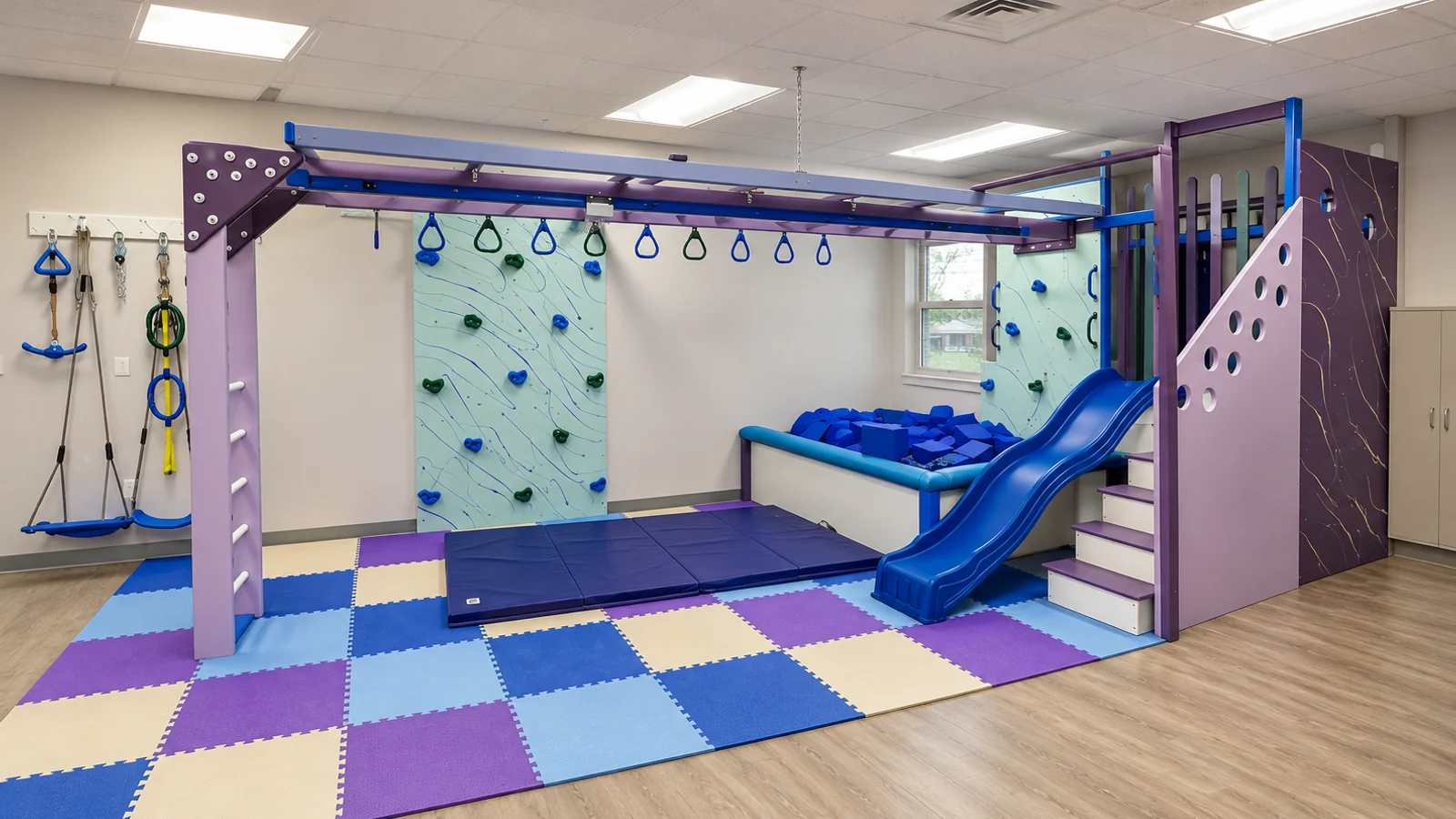
Creating a sensory room at school comes down to five decisions: which students the room serves and why, where it goes, how it's supervised and scheduled, what equipment it holds and how it gets funded. Schools that settle those questions first end up with a room staff use every day, while a room planned around an equipment catalog can end up underused or turned into storage.
Fun Factory has spent 26 years designing and installing sensory gyms for public and private schools, therapy clinics and families. If you're still building the case for one, start with our overview of what a sensory room is, then use this guide to plan the school version.
Who will the school sensory room serve?
In most schools the core group is students whose IEPs or 504 plans include sensory or regulation goals, along with students who need short movement breaks to stay ready to learn. Start there, because the students and their goals decide everything else about the room. Some schools also open the room to general education classes on a schedule.
Bring the school's occupational therapist and special education team into planning from the first meeting. They know which students will use the room, what those students need and which activities the room has to support, and their input keeps the design tied to real goals.
Where should I put a sensory room in my school?
The best spot is close enough to the classrooms it serves that a student can get there quickly, and far enough from the cafeteria, gym and main hallways that noise doesn't leak in. Unused classrooms and resource rooms are the most common choices.
Check three things before committing to a room. A window in the door or an open sightline keeps the room visible to staff, enough floor space leaves room for both an active zone and a calming zone, and a ceiling with accessible structure makes it possible to add swings and other suspended equipment. Your district's facilities team should be part of that conversation early.
How do I set up a sensory area in a classroom?
When a full room isn't available yet, a sensory area in the classroom gives students a place to regulate without leaving the room. A corner with a rug, soft seating, noise-reducing headphones, a visual timer and a few fidgets is enough to start. Keep movement equipment like swings and climbing surfaces in a dedicated room, where it can be mounted and supervised properly, and treat the classroom corner as a calm-down spot.
How should a school sensory room be supervised and scheduled?
Supervise it with trained staff and schedule it with set blocks, because a sensory room works best when every staff member who uses it knows the plan. Have the OT train staff on what each piece of equipment is for, how to use it safely and how to tell when a student is ready to go back to class. Post simple rules, use a visual timer for each visit and keep a sign-in sheet or schedule so the room isn't overbooked.
Schedule the room in two ways: planned blocks for students whose IEPs include sensory time, and open slots for unplanned regulation breaks. The room should always be a support students can count on, never a punishment or a consequence.
A sensory room is also different from a seclusion room. Students should never be locked in or kept in a sensory room against their will, and many states regulate seclusion and restraint in schools, so check your district's policy before writing the room's procedures.
What equipment does a school sensory room need?
School equipment has to hold up to many students a day, be easy to clean and be rated for heavy use. Most school rooms combine an active zone and a calming zone.
| Zone | Purpose | Common equipment |
|---|---|---|
| Active | Movement and heavy work before returning to class | Platform and lycra swings, climbing walls, monkey bars, crash pads, ceiling discs |
| Calming | Lowering stimulation and resetting | Soft seating, tunnels, retreat spaces, dimmable lighting |
| Transition | Helping students move back to class | A visual timer, a schedule board, a short calming routine |
Our guide to designing a sensory room covers layout and safety in detail.
How can my school pay for a sensory room?
Most schools pay for a sensory room by combining special education budgets, district facilities funds, PTA and PTO fundraising, local business sponsors and community foundations, and many also apply for grants for sensory equipment.
A clear plan helps with every one of these sources. A layout drawing, an equipment list and a short description of which students the room serves and why will answer most of the questions a funder or school board asks.
What does installation look like at a school?
Fun Factory installs most commercial projects over a weekend, so the room is ready on Monday without interrupting classes, and larger installs can be scheduled over school breaks. Equipment is built in our own facilities in Wisconsin and New Jersey and installed by our own crews, and we coordinate with your facilities team on mounting and access. For the full picture of how we work with districts, see our page on building a commercial sensory gym.
Every project starts with a free consultation. Send us photos or a floor plan of the space and our designers will draft a layout with a 3D rendering you can share with your team and your funders. Book a free consultation to get started.
Frequently asked questions
How much space does a school sensory room need?
Less than a full classroom in many cases. We've designed sensory gyms in spaces as small as 8' x 10', though a room shared by several students at once needs enough space for an active zone, a calming zone and open floor between them.
Who should be allowed to use the school sensory room?
Most schools start with students whose IEPs or 504 plans include sensory or regulation goals, then open scheduled time to other students and classes. Decide the rules with your OT and special education team, and make sure every staff member who brings students in has been trained.
How long should a student stay in the sensory room?
Set the length of each visit with the student's OT and stick to it with a visual timer, so the room stays a short reset that helps the student get back to learning. The goal is for the student to head back to class regulated and ready to learn.
Is a sensory room the same as a seclusion room?
No. A sensory room is a voluntary support space with equipment for movement and calming, and students should never be locked in or kept there against their will. Many states regulate seclusion in schools, so check your district's policy when you write the room's procedures.
Can a school sensory room be installed without disrupting classes?
Yes. Fun Factory installs most commercial projects over a weekend, and larger projects can be scheduled over school breaks, so the room is ready when students return.