November 27, 2026 • Rebecca Dean, Fun Factory Sensory Gym
How Do I Open a Sensory Gym?
Adding a sensory gym to your clinic or opening one on its own? Compare the three models, the space you need, timelines and how the gym pays back.
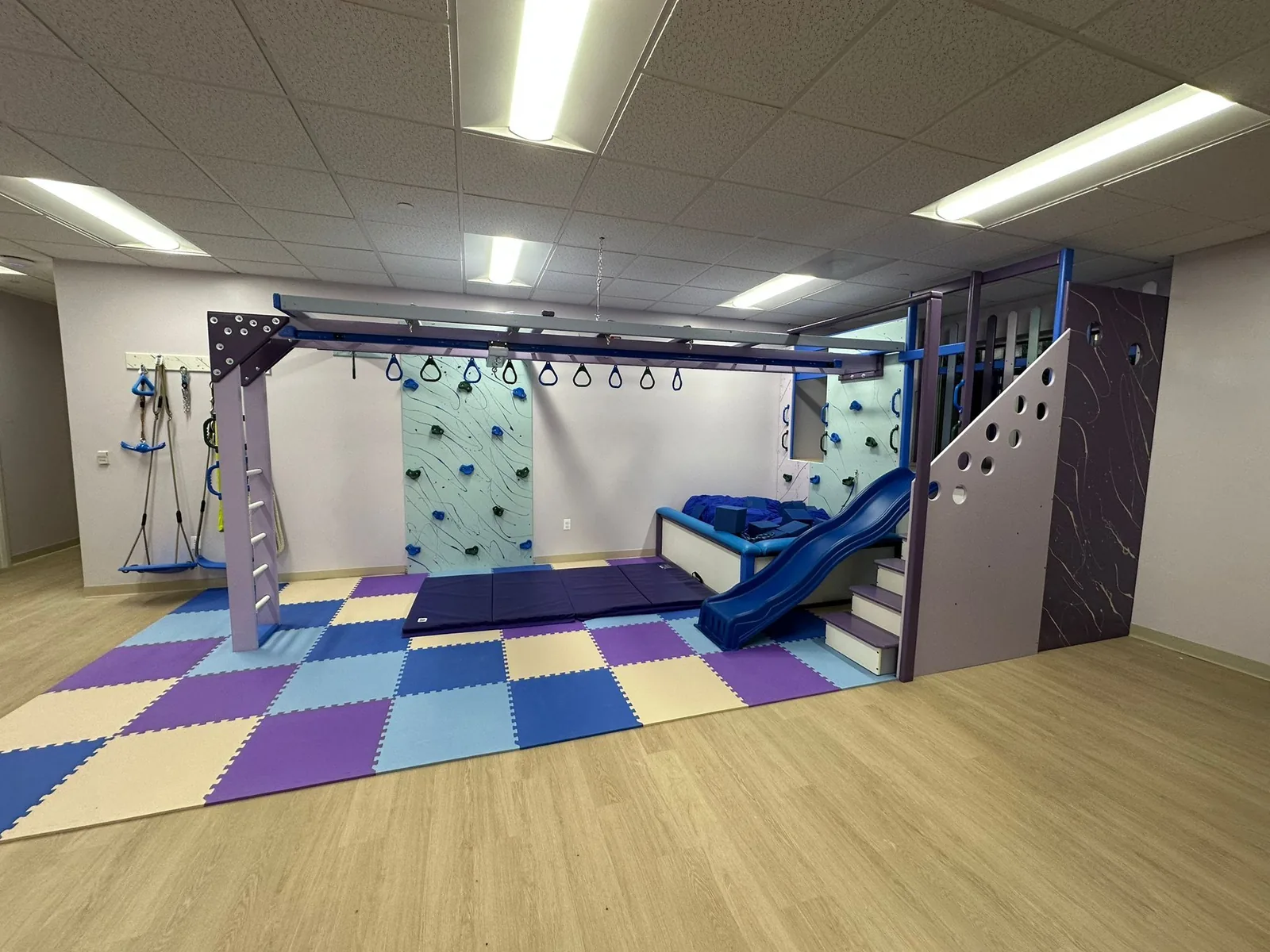
To open a sensory gym, start by choosing your model: a therapy-only gym inside your clinic, a hybrid gym that runs therapy sessions and open play in the same space, or a standalone open-play sensory gym. Then confirm the space and ceiling can support suspended equipment, build a budget and payback plan, sort out permits and insurance for the model you picked, and have the gym designed around how your therapists work.
With the space ready, a clinic gym can go from approved design to first session in about a week. Fun Factory has spent 26 years designing, building and installing sensory gyms, with more than 4,000 installations across North America, many of them for OT, PT, speech and ABA clinics. This guide covers each decision a clinic owner faces, in the order you'll face them. If you're new to the idea, our overview of what a sensory room is explains the types of sensory input a gym provides.
Should my clinic add a sensory gym?
For most pediatric OT and PT clinics, and many ABA and speech clinics, a sensory gym pays off in both care and business. Therapists get the equipment they need for vestibular, proprioceptive and gross motor work without improvising, sessions run more smoothly, and families see a space built for their child the moment they walk in. A gym also lets you run more sessions at the same time, which adds billable capacity without adding square footage elsewhere.
A gym makes the least sense when your caseload is mostly adults or mostly tabletop work, or when your lease is short and the space can't support suspended equipment.
Which sensory gym model fits my practice?
There are three models, and the right one depends on your caseload, your space and how much you want the gym to earn outside therapy hours.
- Therapy-only gym
How it works: The gym is part of the clinic and used only during sessions
Where revenue comes from: Therapy sessions
Best for: Clinics that want better treatment space and more sessions at once
- Hybrid gym
How it works: Therapy runs during clinic hours, and the gym opens to families for open play, sensory-friendly sessions and parties at other times
Where revenue comes from: Therapy plus open play, memberships, camps and parties
Best for: Clinics with evening or weekend gaps and strong family demand
- Standalone sensory gym
How it works: An open-play business with no therapy services, often run as a franchise
Where revenue comes from: Admissions, memberships, parties and classes
Best for: Owners who want a play business focused on kids with sensory needs
| Model | How it works | Where revenue comes from | Best for |
|---|---|---|---|
| Therapy-only gym | The gym is part of the clinic and used only during sessions | Therapy sessions | Clinics that want better treatment space and more sessions at once |
| Hybrid gym | Therapy runs during clinic hours, and the gym opens to families for open play, sensory-friendly sessions and parties at other times | Therapy plus open play, memberships, camps and parties | Clinics with evening or weekend gaps and strong family demand |
| Standalone sensory gym | An open-play business with no therapy services, often run as a franchise | Admissions, memberships, parties and classes | Owners who want a play business focused on kids with sensory needs |
The hybrid model puts a clinic's gym to work during hours it would otherwise sit empty. Some therapy practices already run open play hours and private parties in the same gym their therapists use during the day.
How much space and ceiling height do I need?
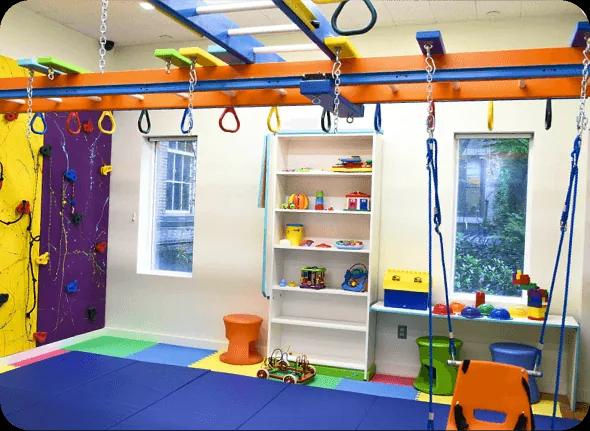
Less floor space than most clinic owners expect. We've designed sensory gyms in spaces as small as 8' x 10', and a single-session gym can be very effective in a small room. A clinic running several sessions at once, or a hybrid gym open to families, needs enough space for separate stations and for swinging equipment to move without crossing another child's path.
Ceiling height and structure matter as much as floor area, because they decide what suspended equipment the gym can hold. Check both before you sign a lease or start a buildout.
How much does a sensory gym cost, and how does it pay back?
The cost depends on the size of the gym, the equipment and the installation, so Fun Factory quotes each project after a free consultation. Our sensory gym cost page models a $30,000 clinic gym using typical session rates for OT, PT and ABA, and shows how the gym can pay for itself through added sessions and referrals. You can plug in your own numbers with our ROI calculator.
Clinics can pay 50% down with the balance at installation, or 50% down and finance the rest, and qualifying clinics can get 0% interest for up to 12 months through our PLOT financing program.
What revenue can a sensory gym add?
A sensory gym adds revenue in more ways than most clinic owners plan for:
- More sessions at once. Each station that can run its own OT or PT session adds billable capacity during your busiest hours.
- Referrals. A visible, well-equipped gym gives physicians, schools, IEP teams and other providers a reason to send families your way, and parents tell other parents about it.
- Open play and sensory-friendly sessions during evenings and weekends, for the hybrid model.
- Memberships and punch passes for families who want regular access between therapy sessions.
- Camps and groups, such as summer programs and social skills groups that use the gym.
- Private parties for families who want a birthday space that works for their child.
Should I open a sensory gym franchise or go independent?
Sensory gym franchises offer a known brand, an operating playbook and franchise support in exchange for franchise fees, royalties and less control over your concept. Before you sign anything, read the franchise's Franchise Disclosure Document, which lays out every fee and obligation.
Going independent lets you build the gym around your own clinic, your therapists' methods and your local market, and it's the only path for the therapy-only and hybrid models. For a clinic owner, the gym is an extension of the care you already provide, which is why independent is usually the better fit.
What permits, insurance and safety rules apply?
A therapy-only gym inside an existing clinic usually falls under the permits you already have, but adding equipment can still require a building permit, so check with your local building department. If you add open play, parties or a standalone gym, confirm that your zoning and certificate of occupancy allow public recreational use.
Tell your insurance carrier exactly how the gym will be used. Open play and parties bring members of the public into the space, which may need different liability coverage than therapy sessions, and you'll want a signed waiver for every open-play visit. The space also has to meet ADA accessibility requirements.
Inside the gym, every suspended piece must be anchored into the building's structure and rated for the forces of a moving child, with impact-absorbing flooring and clear zones around anything a child can swing on or fall from.
How should I lay out a clinic sensory gym?
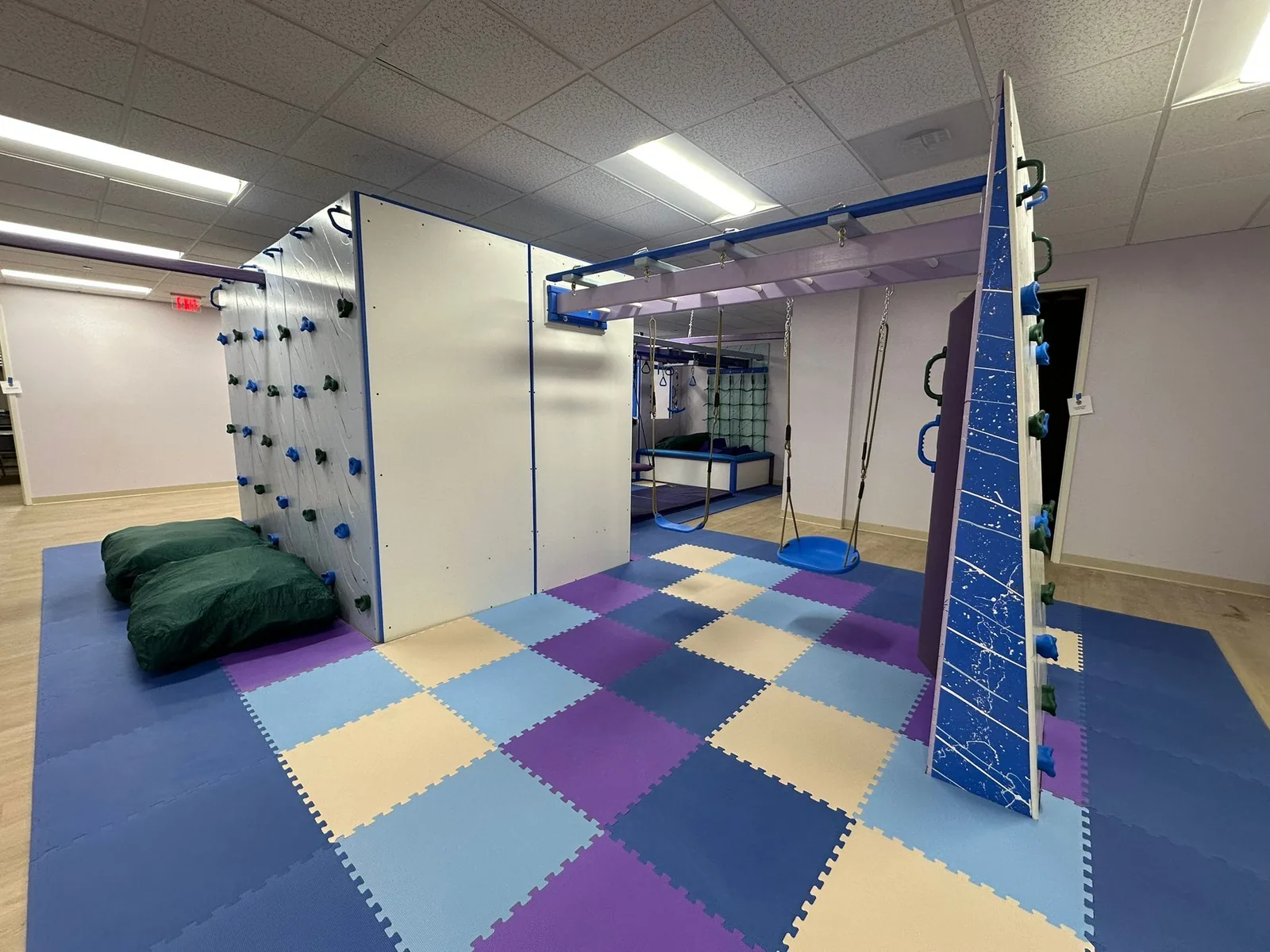
Design the gym from the center out. Keep the middle open for movement and transitions, put stations around the edges so each therapist has room to work, and make sure every therapist can see the whole room from wherever they stand. Plan storage next to the stations that use it, and give every swing and climbing surface a clear landing zone.
If you're planning a whole clinic around the gym, our guide to pediatric clinic design covers entry, treatment rooms and staff space. For clinics that use DIR/Floortime, our post on DIR Floortime and sensory gym design covers equipment that supports child-led play.
How long does it take to open a sensory gym?
Once the space is ready, the gym itself moves quickly. Here's how a Fun Factory clinic project runs:
- Free consultation. Send photos, a floor plan or a video walkthrough, and tell us how many children will use the gym at once.
- Design. Our designers draft a layout with a 3D rendering and revise it as many times as you need.
- Manufacturing. Our carpenters build your equipment in Wisconsin or New Jersey, which takes three days to a week after approval.
- Installation. Small clinics are usually installed over a weekend so therapy isn't interrupted, and large facilities can take up to two weeks.
Any buildout, permits or lease work on your side comes first, so start the design conversation early enough that the gym lands when the space is ready.
Who should build and install my gym?
Pick a company that designs, builds and installs the gym itself, so one team answers for how it holds up. Our guide to choosing a sensory gym installer covers how to compare quotes. For a clinic, these are the questions that matter most:
- Is the equipment engineered as a weight-rated system, and what is it rated for?
- Do you build the equipment yourselves, or resell another manufacturer's?
- Are your installers your own trained employees, and are you insured and bonded for this work?
- Will you work with our therapists during design, and how many revisions are included?
- Can the gym be reconfigured or expanded as our caseload grows?
Fun Factory handles sensory gym design and installation from start to finish. We build every piece in our own facilities, install with our own certified crews, are insured and bonded specifically for sensory gym installations, and design equipment that can be swapped or added later. Many of our clinic clients have gone on to open additional locations. See how we approach a full occupational therapy gym, or book a free consultation to start your design.
Frequently asked questions
Do I need to be a therapist to open a sensory gym?
No, not for an open-play sensory gym, which is a play business and doesn't provide therapy. Offering OT, PT, speech or ABA services in the gym does require licensed clinicians, which is why the therapy-only and hybrid models are usually run by clinic owners.
How much space do I need for a sensory gym?
Fun Factory has designed sensory gyms in spaces as small as 8' x 10'. A gym that runs several sessions at once or opens to families for open play needs more room, and the ceiling height and structure decide which suspended equipment it can hold.
How long does it take to open a sensory gym?
Once your space is ready, about a week. Manufacturing takes three days to a week after the design is approved, and a small clinic gym is usually installed over a single weekend. Large facilities can take up to two weeks.
Can I add a sensory gym without closing my clinic?
Yes. Fun Factory schedules clinic installations over weekends so therapy isn't interrupted, and our mobile crews can build and mill equipment on site.
Is a sensory gym franchise worth it?
It can be for an owner who wants a standalone open-play business with a known brand and a playbook. Clinic owners usually get more from an independent gym, because it can be designed around their therapists and run as a therapy-only or hybrid space without franchise fees or royalties.
Does Fun Factory provide therapy services?
No. Fun Factory designs, builds and installs sensory gyms. The therapy is provided by your clinicians, and we design the gym around how they work.